
Book #1
Book Title: Cornelius the Dragon
*Picture of Book*
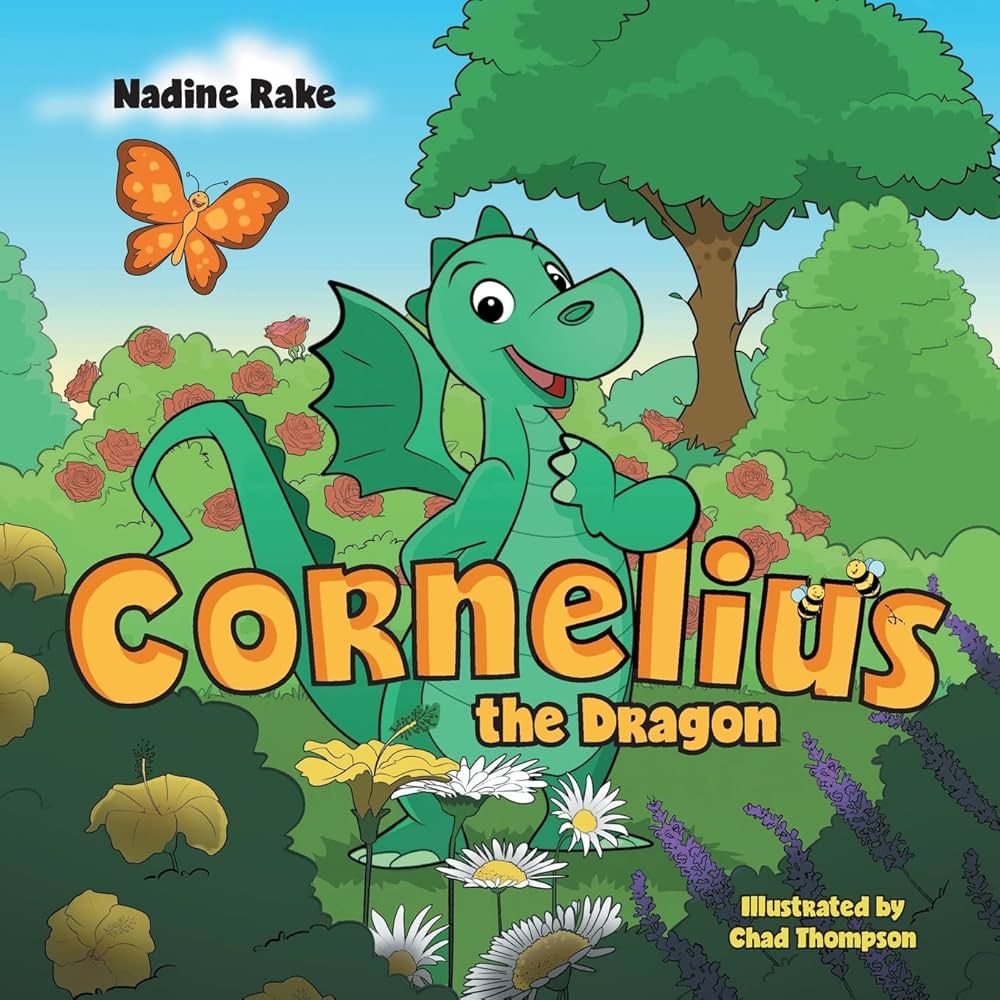
Image source: Amazon.ca
Book Author: Nadine Rake (Kootenay resident!)
Canadian ✓
BIPOC Local (Ktunaxa Nation/Kootenays) ✓
Book Illustrator: Chad Thompson
Canadian ✓
Book Type: Children’s picture book
Topics: Identity and self discovery Grade Level(s): 1/2
Subjects: English, Art
Curricular Content/Competencies:
-Engage actively as listeners, viewers, and readers, as appropriate, to develop understanding of self, identity, and community.
-Reflect on creative processes and make connections to other experiences.
Book Summary: Cornelius is a dragon who doesn’t like acting like other dragons, he would rather spend his time gardening than breathing fire. His family doesn’t understand him and tries to make him behave like a ‘normal’ dragon. One day, he’s put in charge of guarding a princess, but she isn’t a ‘typical’ princess either. Together, they find a way to escape and follow what makes them happy. In the end, Cornelius proves that being yourself and following your own path really matters.
Book Activity:
-Connect to Indigenous ways of knowing. Talk with students about how some stories and teachings from Indigenous Peoples highlight that everyone has a unique gift or role in the community.
-Ask students: “What is something you love to do that makes you unique? Why do you love it?”
-Students will think-pair-share
-Students will do an art and writing activity, they will draw a picture of themselves doing something that shows who they are or what makes them special (like gardening for Cornelius).
-Students are to label their drawings, and to add a caption at the bottom.
-Gather students in a sharing circle when finished, students will go around and share their drawings
-In the circle, have a discussion on how we can all celebrate our differences.
-At the end, gather the drawings into a class book called ‘Our Unique Gifts’. Display it in the classroom
Book #2
Book Title: When I Was Eight
*Picture of Book*

Image source: Amazon.ca
Book Author: Margaret Pokiak-Fenton and Christy Jordan-Fenton
Canadian ✓
Indigenous ✓
BIPOC ✓ Local (Ktunaxa Nation/Kootenays)
Book Illustrator: Gabrielle Grimard
Canadian ✓
Indigenous ✓
BIPOC ✓
Book Type: Children’s picture book
Topics: Identity, resilience, and Indigenous experiences Grade Level(s): 5/6
Subjects: English, Social Studies
Curricular Content/Competencies:
-Construct meaningful personal connections between self, text, and world.
-Sequence objects, images, or events, and recognize the positive and negative aspects of continuities and changes in the past and present (continuity and change)
Book Summary: This story is about a young Indigenous girl named Olemaun who is sent to a residential school. She faces harsh treatment, her hair is cut, she’s made to do chores, and she’s discouraged from speaking her language, but this sparks her determination to learn how to read English on her own. Despite many challenges, her courage and persistence help her make progress, and the story shows how strong she stays even when others try to take away her identity and voice.
Book Activity:
-Students identify and order key events from Olemaun’s experiences in the book.
-Students will research and add 4-5 pieces of information about Residential schools to their story map.
-Students will write a short reflective paragraph about what Olemaun’s story teaches about identity and resilience.
-We will do a gallery walk at the end to share students work and ideas
Book #3
Book Title: The Boy Who Refused to Lie
*Picture of book*
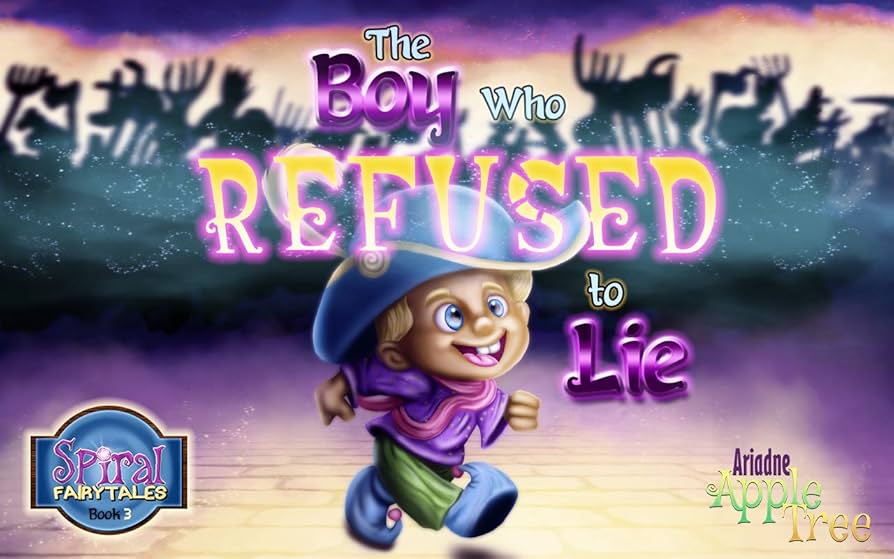
Image source: Amazon.ca
Book Author: Ariadne Appletree (Cranbrook
Resident!)
Canadian ✓
Local (Ktunaxa Nation/Kootenays) ✓
Book Illustrator: Ariadne Appletree (Cranbrook
Resident!)
Canadian ✓
Local (Ktunaxa Nation/Kootenays) ✓
Book Type: Children’s picture book
Topics: Children’s picture book Grade Level(s): 2
Subjects: English, Art
Curricular Content/Competencies:
-Use personal experience and knowledge to connect to stories and other texts to make meaning.
-Explore personal experience, community, and culture through arts activities
Book Summary: This is a story about a king who bans anyone who says something he doesn’t like, so everyone in his kingdom starts lying to stay safe. One day, a boy from a place that only speaks the truth comes to the kingdom. People don’t like that he tells the truth, and they try to push him out, but he keeps trying and makes it to the king. The boy explains to the king that when people are afraid to speak honestly, lies take over and even the king becomes a fool. In the end, the king learns to listen, and let people speak freely, and their kingdom goes back to being a place where people thrive.
Book Activity:
-Prompt a discussion on how sometimes telling the truth means sharing facts, like “I broke the vase.”
-Think pair share about a time when you told the truth
-Other times, honesty can hurt someone’s feelings if not shared carefully, like saying “Your hair looks funny.” Outline the difference between telling the truth and potentially hurting someone’s feelings.
-Have scenarios where students decide if they should say something
-Students will draw a picture of a time when they told the truth to make things better
-Students will write a sentence on how telling the truth made things better in their scenario
Novel Study
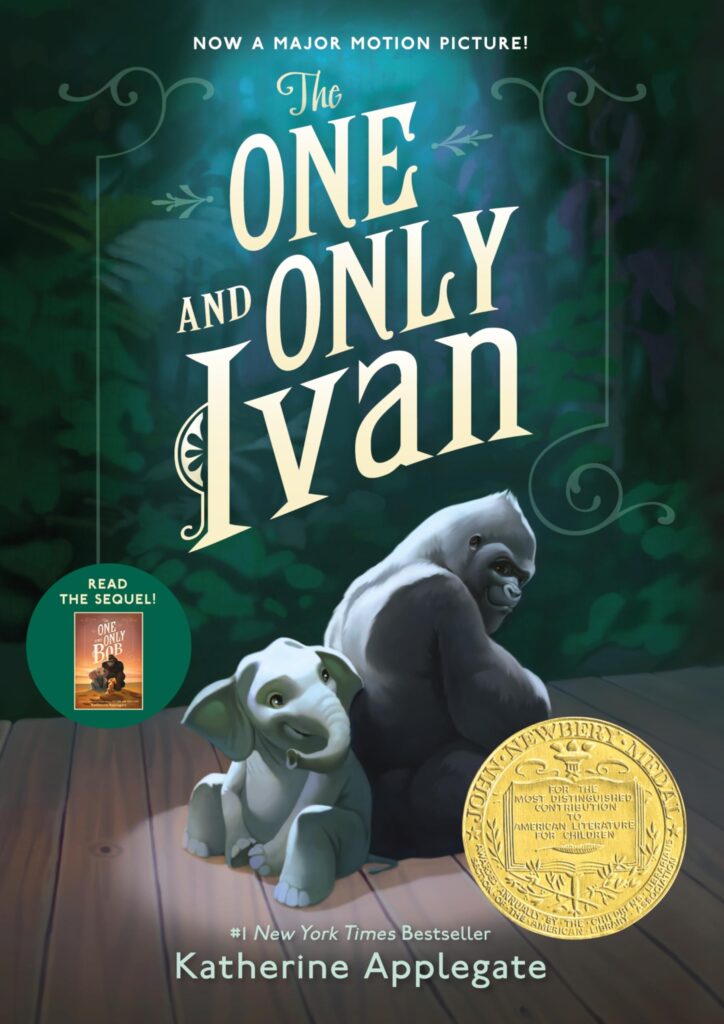
Book Title: The One and Only Ivan by Katherine Applegate
Grade: 5/6
Subjects: English Language Arts, Math, Art/Drama
Big Ideas:
In ELA, students explore how stories help us understand ourselves, others, and the world, and how language can be creative and meaningful. In Art and Drama, students use different forms of expression to communicate ideas and emotions. In Math, students learn that properties of shapes and objects can be measured and compared using perimeter, area, volume, and capacity.
Curricular Competencies:
Students will make meaningful personal connections between themselves, the text, and the world. They will create artistic work both independently and collaboratively using imagination and inquiry. In math, they will model real-life situations using perimeter, area, volume, and capacity. Students will also build communication, creative and critical thinking, and social responsibility skills throughout the unit.
Summary of Book:
The One and Only Ivan tells the story of Ivan, a silverback gorilla who lives in a cage at a shopping mall. Inspired by his friendship with a young elephant named Ruby, Ivan begins to see his life differently and decides to help her find a better future. The novel explores themes of friendship, freedom, responsibility, and compassion for animals.
Summary of Learning Activities:
Students read about 30 pages before each session and take part in discussions and hands-on activities. They explore point of view through rewriting and tableau, examine setting and mood through drawing, and map character relationships. Students create comic strips, watercolor paintings, and drama performances to show understanding. Math is integrated through activities measuring Ivan’s cage using perimeter and area, and exploring volume and capacity. Students also connect the novel to Indigenous perspectives, protests, and the First Peoples Principles of Learning, and finish the unit by designing and mapping their own zoo.
Summary of Assessments:
Formative assessment includes observation, participation, worksheets, peer feedback, reflections, and discussions. Most major tasks use single-point rubrics so expectations are clear and students can self-assess. The summative assessment is a culminating project where students design and map their own zoo, incorporating math skills, artistic elements, and a written component.