
What does it mean to be ‘effective’?
For me, being effective means that my students actually understand what I’m teaching, can use it in real life, and feel motivated to keep learning. It’s not just about finishing lessons or covering content, it’s about seeing growth in my students and helping them feel confident and capable.

What characteristics does an effective teacher have?
I think an effective teacher is patient, flexible, and can adjust to what students need. They’re good at communicating, making lessons interesting, and they really care about their students. They also know how to manage a classroom without making it feel strict or scary, and they reflect on their own teaching to keep improving.
What kind of teacher do I want to become?
I want to be approachable and supportive, but also challenge my students to think critically. I want my classroom to be a safe space where mistakes are okay, creativity is encouraged, and students feel like their ideas matter. I also want to make learning fun and meaningful, not just worksheets and tests.

What do I need to learn to become an effective teacher?
I still need to practice my classroom management techniques (that I learned with Sally!), as well as differentiating lessons for different learners, planning engaging activities, and assessment strategies that actually tell me how students are learning. I also want to learn and practise how to better integrate Indigenous perspectives and multiple ways of knowing into my teaching.

What are my beliefs about teaching (my teaching philosophy)?
I believe all students can learn if we meet them where they’re at and support them in a way that makes sense for them. Teaching isn’t just about delivering content; it’s about helping students grow, think for themselves, and feel valued. I think learning should be active, collaborative, and connected to the real world, and my job is to make it accessible and meaningful for every student.
What is a worldview?
A worldview is basically how you see and understand the world around you. It’s your beliefs, values, and assumptions about people, knowledge, and life in general. It shapes how you think, make decisions, and interact with others.

How would you describe your worldview?
I am always trying to see things from other people’s perspectives. I know my worldview is shaped by my own experiences, culture, and the kind of schools I went to. I really value inclusion, and trying to understand different ways of thinking. I am trying to move away from just the westernized worldview that I have grown up with, I love including Indigenous ways of knowing, thinking, learning and doing into my lessons.
While thinking about your own worldview, also consider the impacts of your ethnocultural, socioeconomic, geopolitical and spiritual identities.
My background definitely affects how I see the world. Where I grew up, my family values, and the communities I’ve been part of all influence how I think about teaching and learning. I grew up surrounded strictly by westernized worldviews, and it has taken a lot of effort to move away from those worldviews and open myself up to more. My socioeconomic background has made me notice that not everyone has the same resources or opportunities, so I really want to make my classroom fair. I now constantly think about how my lessons will affect my students, such as for show and tell… will all of my students be able to bring something from home? Is it fair to the students who do not have a ‘super cool toy’ to show off to the rest of the class? Recognizing this has helped me create lessons that are more inclusive for all socioeconomic backgrounds, while also recognizing the biases I may have from the way I was brought up. My cultural and spiritual identity also impacts the way I connect with students and respect their different beliefs and experiences. I find myself constantly thinking about how I will be able to respect all of the diverse cultural identities in my classroom, and celebrate each of them equally.

Why, as a teacher, is it important to be aware of your own worldview, as well as those of your students and school community?
It’s important because my worldview affects the way I teach and the expectations I have for students. If I’m not aware of it, I might accidentally favor certain students or ways of thinking, and that can make some students feel excluded. Knowing my students’ worldviews helps me make lessons more meaningful and relevant to them.
What can you do, as a teacher, to ensure that your worldview does not impede the success of the diversity of learners in your classroom?
I will continue to ALWAYS self reflect. I will reflect on my own assumptions and biases regularly, so I don’t let them affect how I treat students. I personally believe that pretending that you do not have biases, will only make things worse. The best thing that you can do is self reflect, and continuously work towards a welcoming and diverse classroom. I will also make sure to listen to my students, ask questions, and really pay attention to their perspectives. I will plan lessons that include different voices, cultures, and ways of knowing, especially Indigenous perspectives. I won’t just speak of these ways of knowing, but I will weave them into every lesson, and in to my general teaching style.
When do you consider it to be necessary to challenge the western worldview as it impacts the K-12 education system?
I think it’s necessary whenever it limits students’ understanding of the world, reinforces inequality, or leaves out important voices. For example, history lessons often focus mainly on European perspectives, and I think it’s important to include Indigenous history and global perspectives to give students a more complete picture. I also think that including various worldviews other than westernized ones helps students feel seen and valued, especially those whose cultures and identities are often marginalized in school spaces. It encourages critical thinking by pushing students to question whose knowledge is being prioritized and why. Challenging a western worldview isn’t about rejecting it entirely, but about expanding learning so students can better understand the complexity of the world and their place within it.
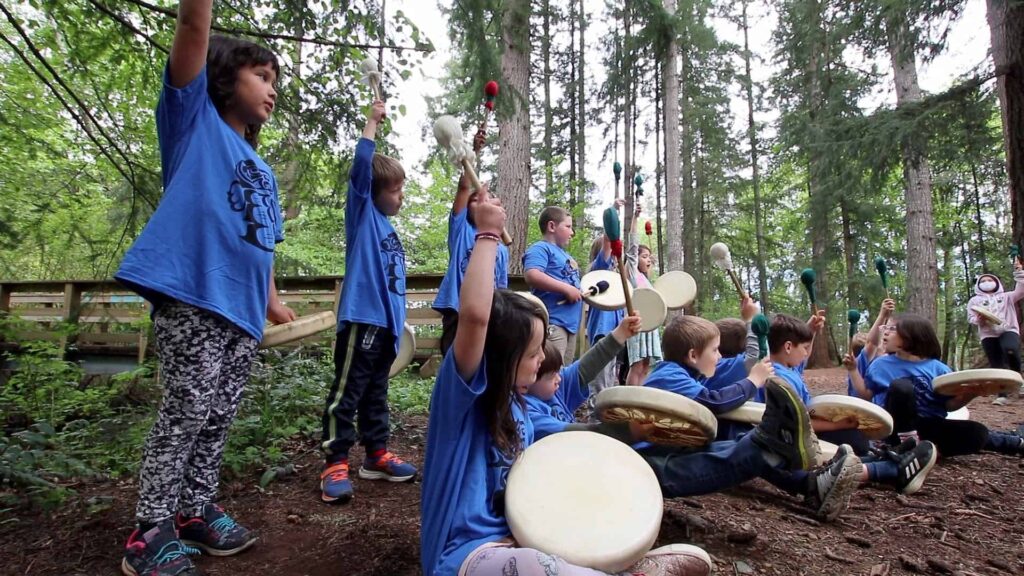
What aspects of the BC curriculum reinforce or challenge a western worldview?
I think the BC curriculum both reinforces and challenges a western worldview. In Grade 5 Social Studies, there’s a big focus on Canadian government, institutions, and economic development, which reflects a western way of organizing society. Even when learning about past injustices, it can still feel very government-focused depending on how it’s taught.
At the same time, the curriculum challenges a western worldview by directly addressing things like residential schools, the Head Tax, and First Peoples land ownership. The focus on perspective-taking and ethical thinking pushes students to look beyond one dominant story.
In Math, the western worldview shows up through standard procedures and the idea that math is universal. However, the curriculum also encourages connections to place, culture, and First Peoples perspectives, which helps show that math isn’t just one way of thinking or learning.
In my opinion, I think it’s up to us as teachers to be intentional about how we teach the curriculum and whose voices we center, making sure all students feel represented and valued.

Sources:
-Images from Google Images
judi61
January 16, 2026 — 12:30 pm
Jenna,
Thank you for your First post! It was indeed one that answered the questions with an open mind and heart. This sentence that you wrote :’Challenging a western worldview isn’t about rejecting it entirely, but about expanding learning so students can better understand the complexity of the world and their place within it” is spot on! We cannot reject our viewpoints or our lived experiences, but with on – going reflection and an open mind and seeing through different lenses, we may be more open to what is and what could be!
Cheers,
Judi