
The use of Story Vines:
Story vines are a hands-on storytelling tool where small objects that represent key parts of a story are glued onto a vine made from braided yarn. As students move along the vine, they use each object as a prompt to retell the story in order.
Textbook connections:
Story vines are a great tool that is showcased in our course textbook: Sometimes Reading is Hard by Robin Bright. The original idea came from author Marlene McKay in her book Story Vines and Readers Theatre: Getting Started.
Image of ‘Story Vines and Readers Theatre’ book by Marlene McKay, image sourced by Amazon.ca
In Sometimes Reading is Hard (2021), Robin Bright mentions that “story vines are based on an old African tradition of storytelling and can be used to develop language and support reading and writing across the curriculum. Story vines involve both planning and performance but are rooted in what students are reading. Students choose a story to read and represent by creating a story vine and sharing it with a group of their peers. The story vine can be shared multiple times with different audiences. This strategy develops students’ understanding of story and sequence, introduces students to new vocabulary, links visual imagery with reading and develops fluency in reading and talking” (p. 91).
Image of ‘Sometimes Reading is Hard’ book by Robin Bright, image sourced by Perlego
Other Online Resources on Story Vines:
I found a really great article by CBC News about Winnipeg teachers learning how to make story vines to bring Indigenous perspectives into their classrooms.
I also found a great example on the Manitoba Education and Early Childhood Learning website called My Story Vine. It shows how students create personal story vines to tell their own stories without writing them down.
My Experience with Story Vines:
I absolutely loved this story vine activity! I think it is a great way to support students when retelling a story, and it is so versatile it can be adapted for any grade or subject!
Creating story vines based off of the book The Paper Bag Princess by Robert Munsch was so engaging, the grade 2/3 students we worked with loved it! They put a lot of effort into their story vines, and I am glad we were able to make our own beforehand to better support them!

My story vine based on the book “50 Below Zero” by Robert Munsch

Student example based on “The Paper Bag Princess” by Robert Munsch
How did the retell go?
I think the retell was a huge success! The story vines helped students visually organize the key events and see how the story connected from beginning to end. The Kindergarten students in our group loved seeing the story vines and hearing the grade 2/3’s retell the story. Afterwards, I read a few other Robert Munsch books with my group of students, which was a success!
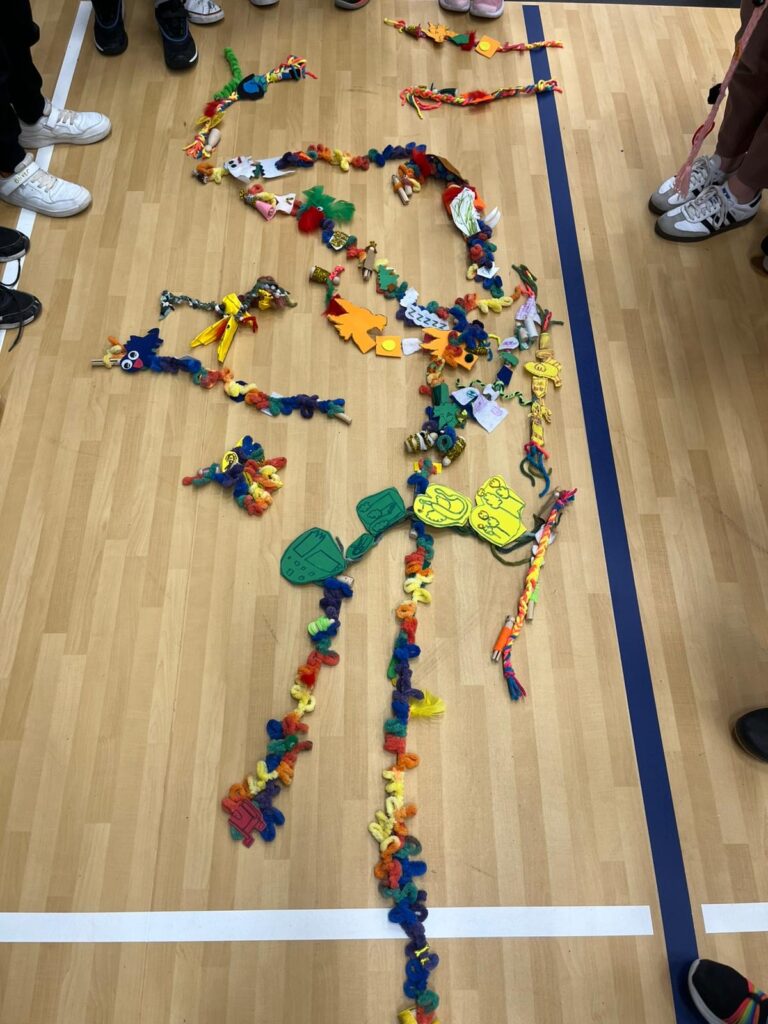
Student story vines based on “The Paper Bag Princess” by Robert Munsch. Image source: Ryley Haynes
Curricular connections for grade 2 and 3:
For the grade 2 curriculum, story vines connect to the English Language Arts Big Ideas ‘Everyone has a unique story to share’ and ‘Through listening and speaking, we connect with others’, as well as the Curricular Competencies of ‘Exploring oral storytelling processes’.
For the grade 3 curriculum, story vines connect to the English Language Arts big idea: ‘Stories can be understood from different perspectives,’ as well as the Curricular Competencies of ‘Using oral storytelling processes’ and ‘Exploring and appreciating aspects of First Peoples oral traditions’.
Connection to the Professional Standards for BC Educators:
I think that story vines connect to Professional Standard #9: “Educators respect and value the history of First Nations…” because they honour Indigenous ways of knowing and storytelling!
Resources:
Sometimes Reading is Hard by Robin Bright.