

Photo of my literacy station
What did I do?
For my Grade 1 literacy station, I used Magic E Bingo to help students practice decoding. I would pull a word from a jar, and one student would read it aloud. Then the group would find the matching word on their bingo card and cover it with a paper marker. This gave them repeated practice with magic e words in a fun, game-like way. I was also able to adjust the activity on the spot depending on their reading level. If Bingo was taking too long for a group (which only happened once), I switched it to Roll and Read using big foam dice to keep things moving and engaging.
What did my teaching partners do?
In our Grade 1 literacy block, each person led a different station to support reading in engaging ways. Lauren facilitated an I Spy activity to help students practice word recognition. Carolyn used Snakes and Ladders, where students read words as they moved along the board, reinforcing fluency and decoding. Ryan led a word search to help students build familiarity with ‘magic e’ sight words. Our stations ended up working really well together, and students seemed very engaged!
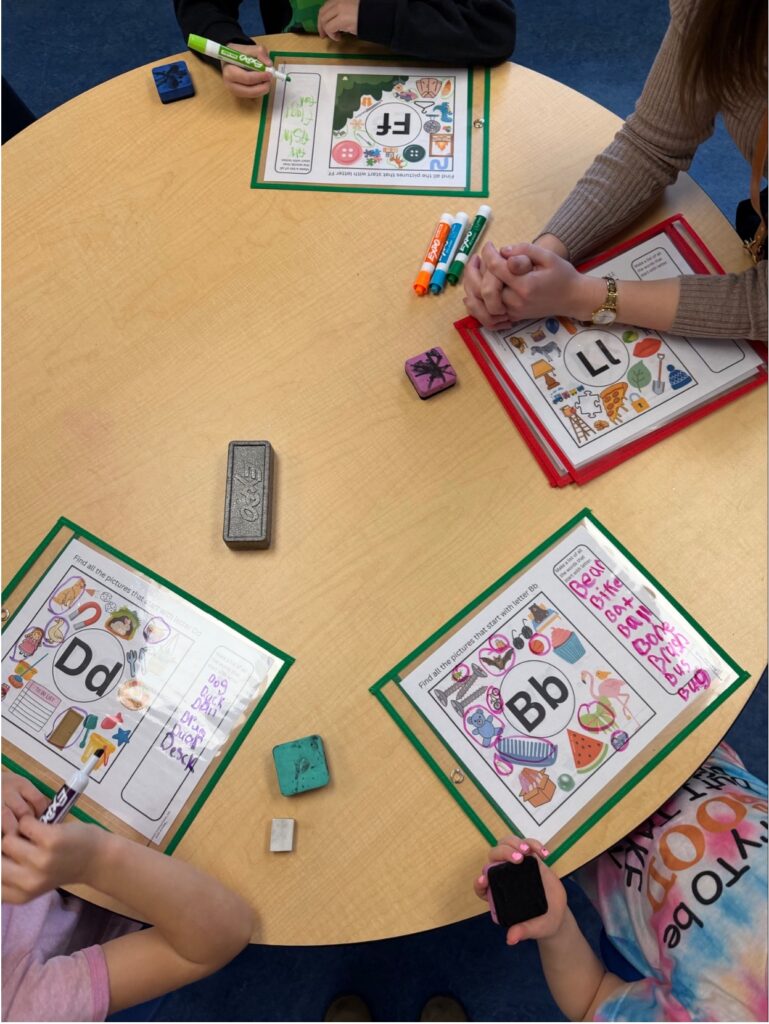
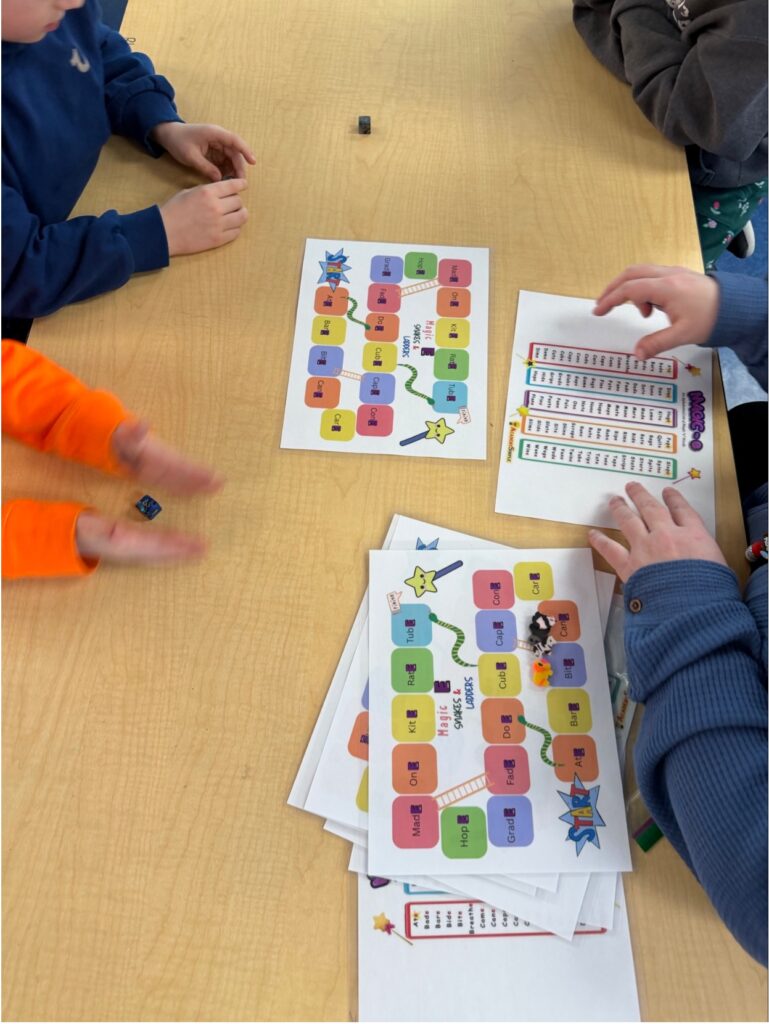
Photos of Lauren’s I spy (top) and Carolyn’s Snakes and Ladders game (bottom). Image sourced by Allie Kostiuk.
Curricular connections:
In the grade 1 BC ELA curriculum, one big idea that connects to our literacy stations is “Playing with language helps us discover how language works”. All of our stations (Magic E Bingo, I Spy, Snakes and Ladders, and Word Search) allowed students to play with words while building important reading skills.
One curricular competency that connects to our stations is “Comprehend and connect (reading, listening, viewing) – Read fluently at grade level”. Through games like Magic E Bingo, I gave students repeated opportunities to read words aloud, recognize patterns, and practice decoding in a fun and supportive way. These activities helped them build accuracy and confidence with reading, which supports fluency.
Finally, a connection to the curricular content is through “Concepts of print, phonemic and phonological awareness, and reading strategies.” Our stations directly supported foundational literacy skills, especially phonemic awareness (like magic e patterns), print awareness, and early decoding strategies.
How does this connect to the Professional Standards for BC Educators?
I think that my experience connects to standard #5- “educators implement effective planning, instruction, assessment, and reporting practices to create respectful, inclusive environments for student learning and development.” Through my literacy stations, I carefully planned engaging activities like Magic E Bingo and Roll and Read to support students’ decoding and fluency skills. I was also able to adjust the activity in the moment based on students’ reading levels, which shows responsive instruction and ongoing assessment. By using structured games and flexible groupings, I created an inclusive environment where all students could participate, feel supported, and develop their reading skills.
Connections to course text:
I think that my experience connects to the course text: Sometimes Reading is Hard by Robin Bright. In chapter 2- “Decoding: On the Path to Fluency”, it talks about early readers and specifically learning how to read, which connects to the grade level I taught for my station. In the section “Make It Fun,” the author reminds us that students need to understand the big picture of learning. She mentions that a structured approach to decoding could look like including “games for students to play with partners and in small groups” (p. 34). This connects to my Grade 1 literacy station because I really focused on making foundational reading skills engaging and meaningful. In my station, I intentionally used a fun game and hands-on practice so students can build their decoding skills in a fun and supportive way!

Image source: Readandspell.com