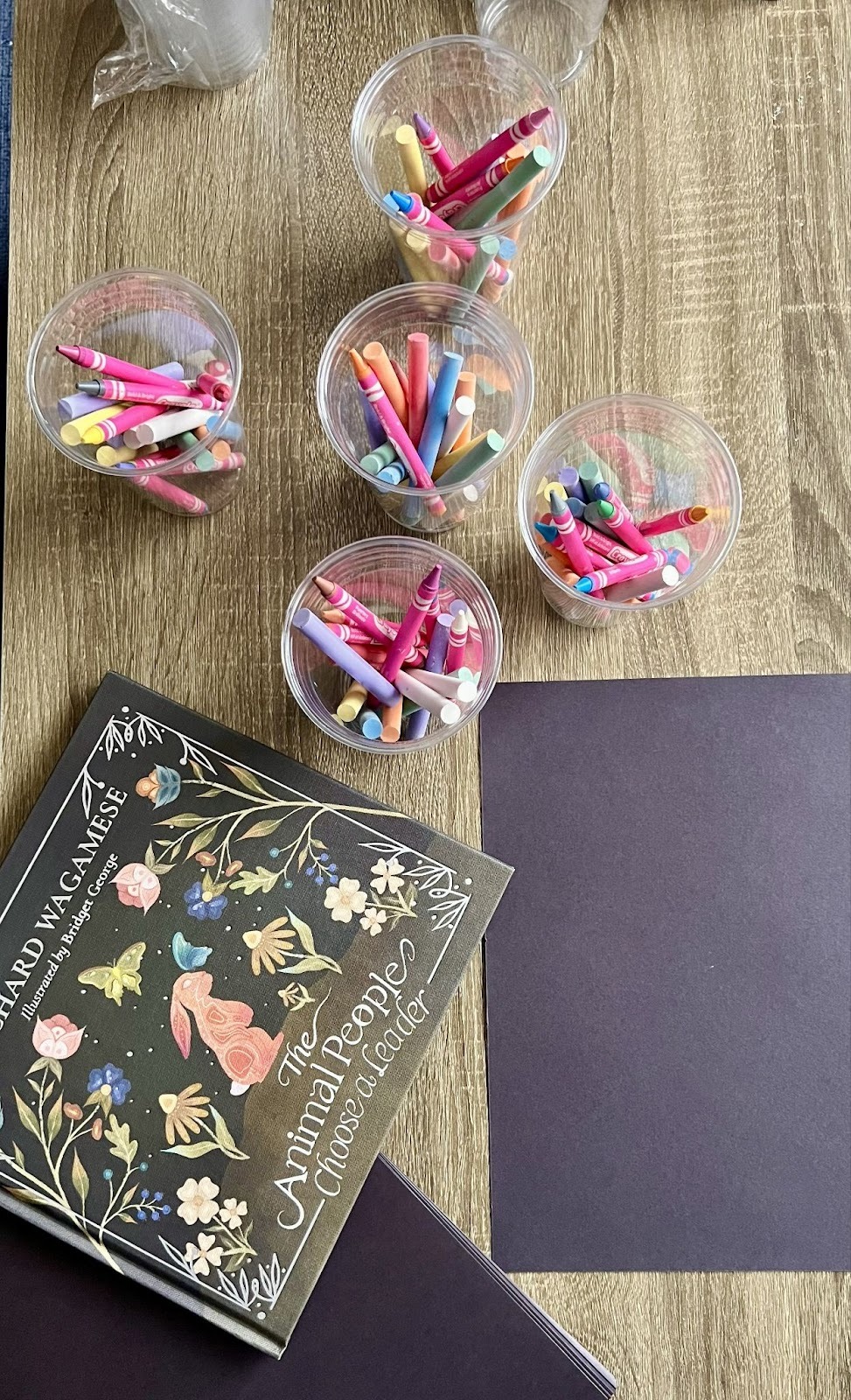
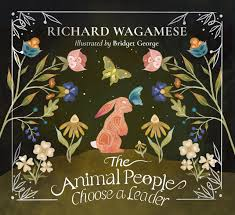
Book: The Animal People Choose a Leader by Richard Wagamese
Teachers: Jenna and Carolyn
| English Language Arts Curricular Connections for grades 5/6: Big Ideas: -Language and text can be a source of creativity and joy. -Exploring stories and other texts helps us understand ourselves and make connections to others and to the world. Curricular Competencies: Comprehend and connect (reading, listening, viewing) -Consider different purposes, audiences, and perspectives in exploring texts -Identify how story in First Peoples cultures connects people to land Create and communicate (writing, speaking, representing) -Exchange ideas and perspectives to build shared understanding Content: -Story/text-forms, functions, and genres of text-text features -literary elements -perspective/point of view | |
| Evaluate | Background Knowledge: -Many students may have prior experiences with classroom leaders and team captains for sports/PE games -Some familiarity with animals -Buffalo, Cougar, Eagle, Wolverine, Horse -Needed to be discussed about what a Wabooz was (rabbit) -Varying levels of understanding of First Peoples stories and oral storytelling traditions |
| Funds of Knowledge: -Personal strengths and characteristics students recognize in themselves (kindness, listening, responsibility). -Experiences working in groups and taking on different roles. -Understanding that people have different strengths that help a group. | |
| Potential Stumbling Blocks: -Understanding leadership as service rather than power or control -Limited background knowledge of First Peoples Principles of Learning -Expecting there to be one “best” leader instead of many different strengths. | |
| Instructional Opportunities: -Discussion of leadership qualities -Connecting story themes to students’ real life experiences. -Modeling reflective thinking through think-alouds. -Using creative responses (writing, art, drama, games) to deepen comprehension. -Clarifying unfamiliar vocabulary and animal names from the story. | |
| Explain | Brainstorm Unfamiliar Words: -Leader -Council -Wisdom -Respect -Responsibility -Stamina -Discerning -Humility | |||
| Words to Teach: | Short, Simple, Straightforward Definitions: | |||
| Leader | A person or being who helps guide others and makes good choices for the group. | |||
| Wisdom | Knowing what is right and making thoughtful decisions. | |||
| Council: | A group of people who make decisions together. | |||
| Respect: | Treating others and their ideas kindly and fairly. | |||
| Responsibility: | Doing what you are supposed to do and being dependable. | |||
| Stamina: | The ability to keep going, even when it’s hard. | |||
| Discerning: | Being able to notice or understand what is important. | |||
| Humility: | Being humble and knowing your strengths and weaknesses. | |||
| Think Alouds: -We notice that the animals are watching how each character behaves, not just what they say. -This makes us think that a good leader listens -We see that some animals are being helpful even when no one is watching. This makes us think that leaders show care quietly. -We notice that each animal has different strengths. This makes us think a good leader doesn’t have to be the same as everyone else. | ||||
| Stopping or Pausing Points: -After the animals discuss what they are looking for in a leader -Before the race starts -When different animals demonstrate leadership traits and race -Before the final leader is chosen to invite predictions | I Language: -“I think this part shows…” -“I wonder why the animals…” Examples: -“I think this part shows how a leader listens carefully.” -“I wonder why the animals didn’t pick the strongest one.” -“I notice that some animals help even when no one is watching.” -“I think this part shows that being fair is important for a leader.” -“I notice that each animal has different strengths to offer.” -“I feel like the story is teaching us that anyone can be a leader.” | |||
| Engage and Extend | Social-Emotional Learning Engagement: -Discuss empathy, listening, and respect. -Reflect on how it feels to be chosen, not chosen, or to support a leader. -Encourage students to value their own strengths and those of others. |
| Activities: -Prediction Writing: Students write predictions about how they think the story will end before the leader is chosen. -Perspective Writing: Students write as one of the animals in the story, explaining their thoughts and feelings. -Leadership Game: One student is the leader performing simple actions, another student leaves the room and returns as a detective to guess who the leader is (up to 3 guesses). -Art Activity: Create chalk drawings inspired by animals and nature -Personal Reflection: Students write personal characteristics that would make them a good leader. -First Peoples Principles of Learning Activity: Cut-and-paste activity matching principles of learning to examples from the story | |
| Cross-Curricular Extensions: -Art: Chalk art -Language Arts: Narrative and reflective writing activities. -Social Studies: Community roles and decision-making. -Drama: Re-enactment of the animals choosing a leader. -SEL: Practice teamwork and cooperation through cooperative games. First Peoples Principles of Learning: -Learning is embedded in memory, history, and story. -Learning requires exploration of one‘s identity. -Learning recognizes the role of Indigenous knowledge. | |
| Extensions to Support Reading and Writing: -Create a class chart of “What Makes a Good Leader.” -Journal response: “What kind of leader do I want to be?” -Small-group discussions using sentence starters and evidence from the text. |
First Lesson Reflection:
During our three-week read-aloud with the Grade 5/6 class, Carolyn and I explored The Animal People Choose a Leader by Richard Wagamese. We read the story in sections, pairing each part with an activity. In the first lesson, students wrote predictions from an animal’s perspective before the race began. We ended with a leadership game where one student led and another guessed the leader. The lesson promoted engagement, perspective-taking, collaboration, and inclusive, responsive teaching aligned with the Professional Standards for BC Educators.
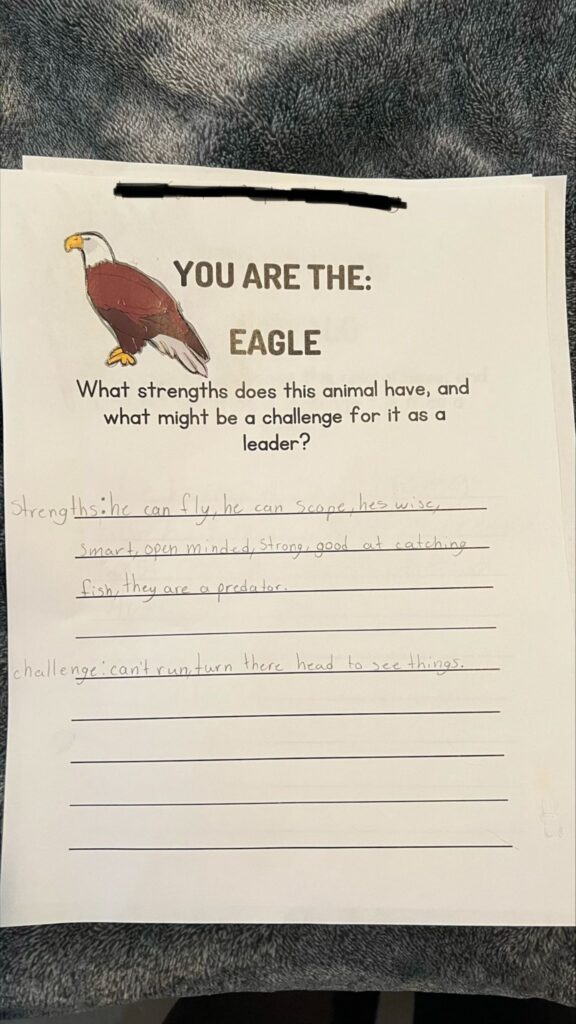
Photo of one of our perspective activities, done in our second lesson
Second Lesson Reflection:
In our chalk art activity inspired by The Animal People Choose a Leader by Richard Wagamese, students created drawings on black construction paper featuring 1–3 animals and at least three nature elements from the story. They were highly engaged and produced beautiful work. We provided different sizes and types of chalk to ensure accessibility and comfort for all learners. Next time, we would allow more time for added detail. This lesson supported inclusive planning and instruction, giving students multiple ways to represent their understanding while also collaborating to discuss each character’s leadership strengths and challenges.
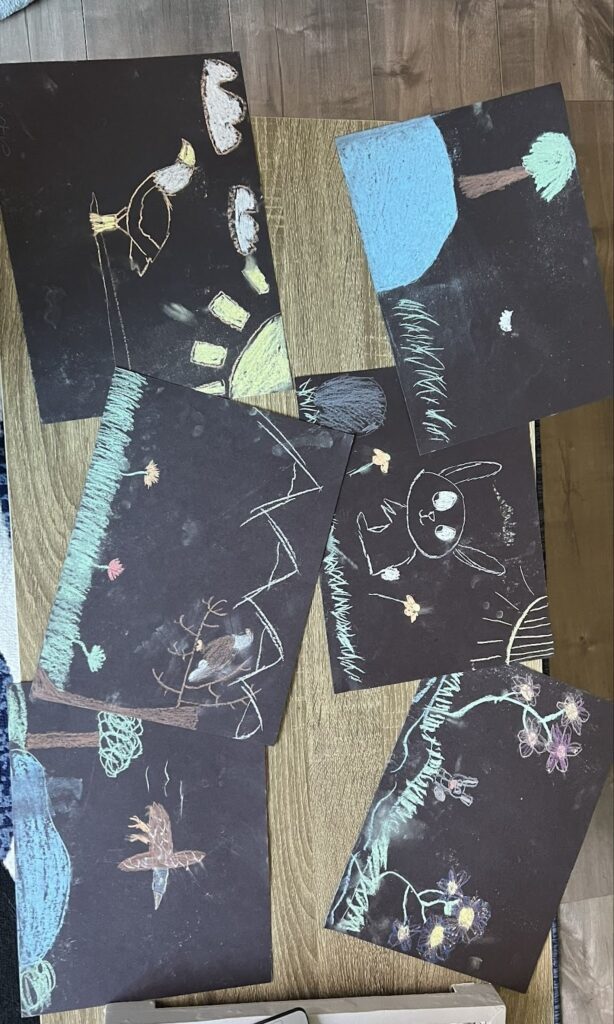
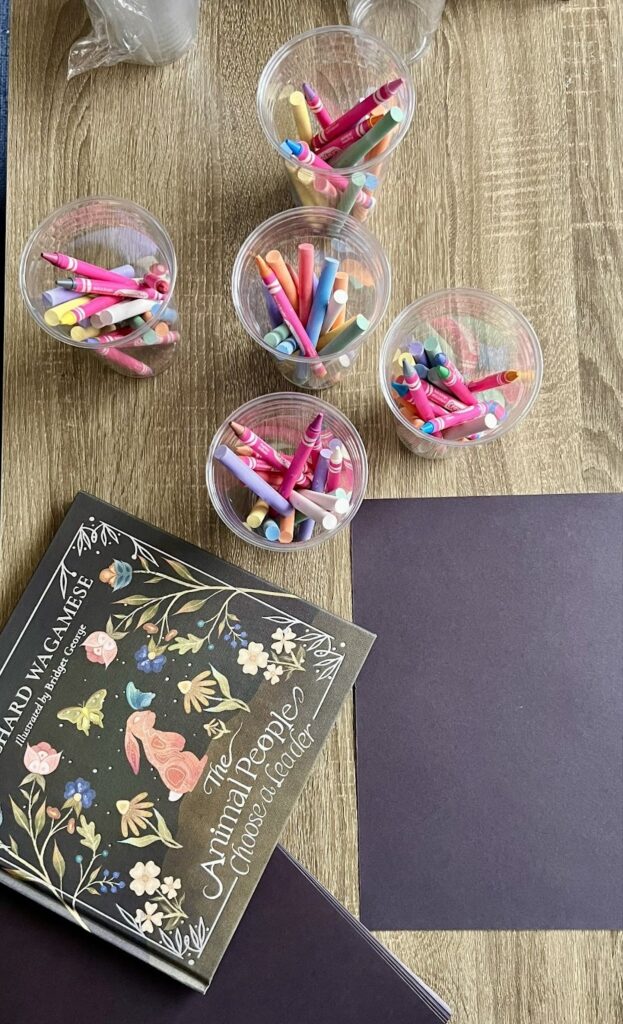
Photos of our chalk art activity
Third Lesson Reflection:
In our personal reflection activity based on The Animal People Choose a Leader by Richard Wagamese, students identified leadership traits from the story and connected them to their own strengths, such as kindness, fairness, and responsibility. Sentence starters and a Canva template supported their writing, and one student shared verbally while we recorded their ideas. Students also matched student-friendly First Peoples Principles of Learning to moments in the story.
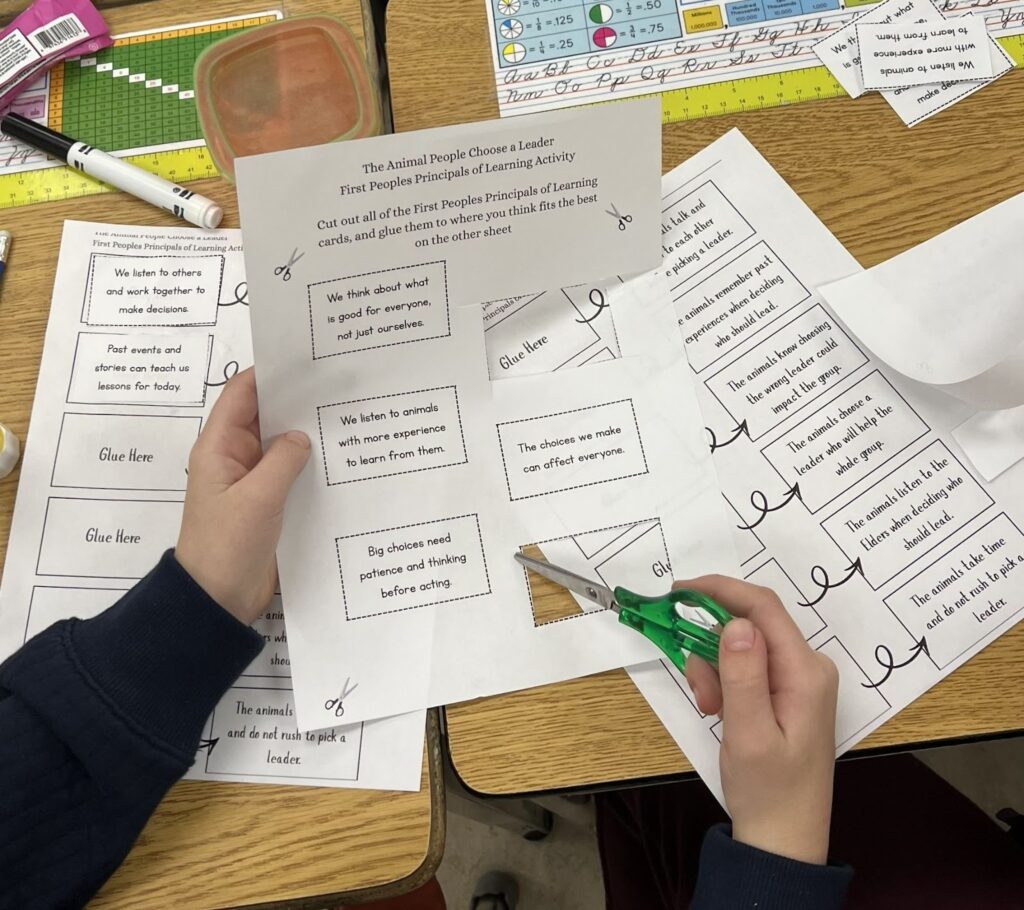
Photo of our First Peoples Principals of Learning Activity
Connections to our course textbooks:
For our read aloud activities, we took some really great ideas from the textbook: Read Alouds for all Learners: A Comprehensive Plan for Every Subject, Every Day by Molly Ness. As shown earlier, Carolyn and I incorporated her three-step framework of Evaluate, Explain, and Engage & Extend into our planning and delivery.
Sources:
Read aloud planning template- Read Alouds for all Learners: A Comprehensive Plan for Every Subject, Every Day by Molly Ness